Featured

2020 Senate Map still tilts Republican

With the passing of Ruth Bader Ginsburg, the importance of who controls the Senate has suddenly become as important as who wins the Presidential election. I haven’t done any analysis on these races since last year, so needless to say, some stuff has changed from my last map update.

I’m going to give a detailed analysis of all races not rated “safe”

Alabama: Doug Jones did the unthinkable in a special election in December 2017: he delivered a Senate victory to Democrats. However, the alignment of the stars that allowed him to eek a victory over Roy Moore 3 years ago is not likely to happen again. For starters, his opponent isn’t Roy Moore, it’s former Auburn coach Tommy Tuberville, which alone makes a world of difference. Secondly, Jones will be running on the same ticket as the Presidential race and will need several hundred thousand Trump supporters to crossover and cast their votes for him in a state with a very inelastic electorate.

The only thing Jones has in his favor is a cash advantage, but in a state President Trump is likely to carry by over 20 points, money is very unlikely going to be enough to save him. I’m moving the Alabama Senate Race from last year’s Lean Republican to LIKELY REPUBLICAN, and that’s probably being generous to Jones.

Arizona: Despite narrowly losing a Senate seat to Kyrsten Sinema in 2018, State Republicans were happy with Governor Doug Ducey’s choice of Martha McSally to fill the seat occupied by the late John McCain. Since being given the Senate seat, she’s vigorously embraced President Trump (and was one of only a few swing state Republicans up for re-election this year to instantly say they supported the effort to fill Ginsburg’s Supreme Court seat this year), which has made her one of the top targets in the nation by liberal activists and donors. Her opponent Mark Kelly has raked in eye-popping sums of money, and has been leading in most polls. As well, while AZ Republicans are still confident McSally can win, they admit she’s probably ever so slightly under performing Trump statewide.

I’m moving Arizona from Tilts Republican to TOSS-UP.

Colorado: From the beginning, Republicans knew they had a fight on their hands to hold a seat in a state Hillary Clinton won by 5 points. That fight isn’t going to alleviate in the final 6 weeks of the campaign at all. Unlike fellow blue-leaning state Senator Susan Collins, Gardner isn’t a centrist, and if anything appears to be doubling down on betting that the conservative base will put him over the top in a state Trump will have a hard time carrying. We’ll see if it pays off.

I’m moving the Colorado Senate race from Toss-Up to TILTS DEM.

Georgia: The Peach State has the distinction of holding 2 competitive Senate races this year. Incumbent Senator David Perdue and appointed Senator Kelly Loeffler are battling to keep their seats in the nation’s upper chamber, and so far both seem favored to remain in GOP hands.

Perdue’s race is the more clear cut of the two. He’s set to run against failed congressional candidate Jon Ossoff for the statewide race, and while the polls look tight, the problem for Ossoff remains that unless he receives an outright majority of all votes on election night, there will be a January runoff for the two of them, in which the electorate is likely to be much older and thus conservative. I’m keeping my rating for this seat as LIKELY REPUBLICAN.

For Loeffler’s, it’s a more complex situation. She’s fending off a strong challenge from Republican congressman Doug Collins and from a slew of Democratic challengers, the leading one being Reverend Raphael Warnock. For this race, it’s almost guaranteed no one will get the magical 50% on election night. However, due to Georgia’s “top two” jungle primary, whoever the top two vote getters are, advance to the runoff (regardless of party affiliation). This has Republicans hopeful that both Loeffler and Collins will be in the top two, and thus will shut out even the most remote chance of Democrats winning this seat. Due to both Collins and Loeffler polling strongly, I’m moving this race from Leans Republican to LIKELY REPUBLICAN.

Iowa: Freshman Senator Joni Ernst is facing a stiff challenge from Businesswoman Teresa Greenfield in a state that has moved sharply rightward over the past 6 years. Polling indicates the race to be dead even, but Republicans are confident that Ernst is likely several points ahead after a 2014, 2016, and 2018 cycle where Democrats consistently and significantly underperformed polling expectations in the state, and I’m rather inclined to agree with them. I’m keeping the Iowa Senate Race as LEANS REPUBLICAN.

Maine: If there’s any race that shows how dead the practice of ticket splitting is in Federal races, it’s this one. Once boasting winning victories that made Republican Senators in red states jealous, Susan Collins is now facing the political fight of her life. The reality is, now matter how deep your independent streak runs, party affiliation seems to matter more than anything else. As of right now, polling is showing the one unbeatable Collins trailing her Democratic challenger Sara Gideon (though it’s very possible those numbers are inflated). For this reason, I’m moving the Maine Senate race from Likely Republican to TILTS REPUBLICAN.

Michigan: One of the best pickup opportunities for Republicans (other than Alabama) is the all important state of Michigan. Despite winning by a very comfortable margin during the 2014 GOP wave, Democratic Senator Gary Peters is facing a much stronger opponent in Republican businessman John James. While both candidates are strong supporters of the respective Presidential nominees, both campaigns are also making plays for soft supporters of the opposing Presidential nominees in case this large swing state narrowly swings against their party. I’m keeping the Michigan Senate Race as TILTS DEM.

Minnesota: The Trump campaign has made a stronger play for Minnesota than any other state won by Hillary Clinton, in large part due to continued Republican trends in the once Democratic bastion of the Iron Range. The play has begun to also seep into the state’s Senate race as well. Democrats hoped Tina Smith’s appointment and 11 point victory in 2018 would scare away a serious challenge in 2020. That appears to be fading in the races final weeks, as former congressman Jason Lewis appears to be closing the gap.

While Smith remains with an advantage, it’s a fleeting one. I’m changing Minnesota from Likely Dem to LEANS DEM.

Montana: The contest here has changed rapidly over the past year. Incumbent Senator Steve Daines seemed easily poised for re-election until term-limited Governor Steve Bullock decided to make a run for the Senate this past March. Over night, the dynamics changed, and this race turned into a top tier race. That continued into the spring when Governor Bullock took what was likely the least restrictive approach of any Democratic Governor in the nation, mindful of an election just 6 months out.

However, Daines and allies have been tying Bullock to national Democrats in a much more successful way (especially as he imposed more restrictions on Montana over the summer) than they’ve ever been able to do with the state’s senior Senator, Jon Tester. While I likely would’ve moved this race to toss-up this spring, 6 weeks out from the election, it’s clear Daines has developed an advantage, so I’m changing the rating from last year’s Safe Republican to this fall’s LEANS REPUBLICAN.

New Hampshire: Seeing the “Live Free Or Die” state’s swing state status, and incumbent Senator Jeanne Shaheen’s history of close races, I’m rather surprised this race isn’t receiving more attention. Lawyer Corky Messner (who is admittedly a rather unknown candidate) will take on the 2 term Senator in a state Hillary Clinton won by just 3,000 votes. While this isn’t yet a “top-tier” race, New Hampshire is known to produce wildly volatile results, and if things continue to trend better for Republicans nationwide, Shaheen’s likely alot more vulnerable than Democrats realize. I’m keeping the New Hampshire Senate race as LEANS DEM.

New Mexico: Senator Tom Udall’s decision to retire, gave Republicans an opportunity to reclaim a seat they once held 12 years ago. Congressman Ben Ray Lujan is the favorite in a state that Democrats have developed a decisive advantage in, but Meteorologist Mark Ronchetti is betting on a stronger than expected showing for the GOP in this heavily Hispanic, but also largely rural state.

I’m keeping my rating for New Mexico as LIKELY DEM.

North Carolina: What may very well be the marquee Senate race of the night, is unsurprisingly one of the nation’s largest swing states. Freshman Senator Thom Tillis is fending off a challenge from attorney Cal Cunningham for a seat he barely won in 2014. Tillis has faced significant backlash from the state’s hyper-conservative base after perceived disloyalty to the President, and even outright loathing from the state’s very active liberal base for his general support of the President’s policies. To say North Carolina is polarized, is a massive understatement, only twice in the past 50 years has any Senator won an election in the Tar Heel state by a double digit margin. That streak is very likely to continue through 2020. While polls currently show Tillis trailing (and tacking a few points behind Trump’s overall performance statewide), his numbers are roughly the same against Cunningham as they were against Kay Hagan 6 weeks before the election, only for Tillis to eek a 2 point victory over the former Senator anyway.

I’m changing the North Carolina Senate race from Tilts Republican to TOSSUP.

While I’ll definitely update this map more often over the next six weeks, I’ll skip making detailed analysis of every competitive race, and offer insight solely on the races that are having ratings changes

Featured

9 weeks out: Where the Presidential race stands

We’ve witnessed nothing short of pure insanity over the past 5 months, and the nation stands more divided than any time in at least the past 50 years. Yet in spite of what can be described as nothing short of continual propaganda, the state of the Presidential race is… virtually the same as it was this winter. The ground hasn’t shifted leftward despite cabalist pundits ensuring us that Kansas and Utah (yet again) are turning into battleground states at any moment. Yet even with a nation and society unrecognizable from ourselves 6 months ago, the ground hasn’t visibly swayed right either. As a matter of fact, just 2 states have made any movement on my updated map.

Florida: After what was nothing short of a disappointing 2018 for FL Democrats, it became clear that Democrats had some work to do if they wanted to win Florida’s 29 EV’s. And while several developments on the ground have actually worked to the GOP’s advantage (Cuban Americans returning to the GOP, tens of thousands of Venezuelan immigrants being nationalized), it’s clear that the GOP’s 25 year reign in the statehouse, as well as Trump’s dip amongst seniors has at least slightly dampened the GOP’s chances here enough for me to move Florida from TILTS GOP to TOSS-UP. The counter of this of course is that violent riots in major cities will repel many older voters away from the party they see as most sympathetic to the violence, but as long as that violence is seeming to happen far outside Florida, it may not have the same effect as it does in other states.

Oregon: In any normal year, Oregon wouldn’t even be on this list. But the combination of stringent Coronavirus regulations and mass street violence caused by anarchists in Portland has changed the political dynamic in the state. Portland Urbanites not affiliated with Antifa have become repelled by the very real image their city is producing nationwide, and liberal leaning Surburbanites in Washington and Clackamas County have completely frozen and reversed what seemed to be their continual slide to the left. Conservatives are undoubtedly energized, seeing that they only missed eligibility for recalling Governor Kate Brown by a mere 2,000 votes in what was one of the toughest atmospheres for collecting signatures in recent history. For these reasons I’m moving Oregon from SAFE DEM to LIKELY DEM.

I’ll be significantly more active with ratings and analysis over the next 2 months than I have been this spring and summer. I was largely waiting for the social atmosphere to calm before making large sweeping predictions, but seeing that this fever pitch atmosphere is likely to extend through at least November, I felt it was appropriate (and important) to announce that while everything has changed, very little electorally has actually changed.

Featured

My First Blog Post

My (brief) Introduction

Hello WordPress, my name is Doug Ditchfield. I’m a Political Science major from Upstate New York who has taken a brief hiatus from actively engaging in politics, but has decided to dive in once more.


Like anyone, I have my own set of very strong political beliefs… This blog however will solely be dedicated to my 2020 political predictions for the Presidency, Senate, House, and Governor races across the country. I’ll give as much in depth analysis as I can, and do my best to update ratings to reflect the changing political climate in real time.


I hope you enjoy my articles, and feel free to add your own personal comments on my ratings in the section below! Everyone else is already taken.

— Oscar Wilde.

This is the first post on my new blog. I’m just getting this new blog going, so stay tuned for more. Subscribe below to get notified when I post new updates.

Trump V. Biden

Well, it’s official. With Bernie Sanders withdrawing from the race today, Joe Biden is the presumptive Democratic nominee. With that, comes a few tweaks to my Electoral College prediction map, though despite an entire impeachment process, a Democratic nomination process, and now a pandemic, the map hasn’t changed drastically.

Colorado: The mile high state has had a rapid political transformation over the past 15 years due to an influx of young progressives and Hispanics into metro Denver. While this has buoyed Democrats to winning nearly every statewide race since 2006, it presents a unique problem to Democratic nominee Joe Biden who has demonstrated a poor showing amongst both groups. It’s unclear just how much defection there will be from both groups, but Democrats could find themselves with another “blue wall” surprise if they take the state for granted. I’m moving Colorado from LIKELY DEM to LEANS DEM.

Iowa: It wasn’t long ago Democrats were serious in their quest to win the state in 2020, and had Pete Buttigieg or even Bernie Sanders been the nominee, it’s likely they still would be. But Joe Biden isn’t much of a retail politician anymore (as his 4th place showing in the Iowa caucus demonstrated), and the state’s lack of black voters combined with its large rural population are gonna make this a nearly impossible feat for the former Vice President. I’ve shifted the Hawkeye State from TILTS GOP all the way to LIKELY GOP.

Michigan: Donald Trump won the mother of jackpots in 2016 by winning the state by a razor thin 0.2% margin. Meaning, he either has no room for error, or he has to expand his base. There’s little indication of either, but with polling showing him trailing Biden, even the slightest sliver of his 2016 base being peeled away could be enough to lose him this state. For that reason, I’ve moved Michigan from TOSS-UP back to TILTS DEM.

Nevada: Despite Nevada approaching majority-minority status, the state seems to not be moving much to the left. There’s arguably no state in the nation where Biden’s weakness with Hispanics will be worse than Nevada where Latinos make up 30% of the population, and where Democrats desperately need high turnout and large margins amongst them to counter the state’s rightward drift among white voters. Hillary won the state by less than 3 points in 2016, so any defection here can easily swing the state’s 6 electoral votes. I’m moving Nevada from LEANS DEM to TILTS DEM.

I was going to wait until May to make more accurate post-pandemic predictions, but Sanders abrupt ending of his Presidential campaign means for the first time we have an actual candidate with strengths and weaknesses instead of just a generic Democrat. We’ll see if Sanders supporters come around to supporting Biden or if there’s a mass splintering heading into the convention, and of course we’ll see what effect if any Coronavirus has on the election moving forward, but for now, it seems like little has drastically changed electorally.

Ratings Change: U.S. House shifts right.

As the impeachment inquiry now heads to the Senate, it’s effect on House Democrats has left their modest majority in a much weaker position than they were just a month ago. This combined with Trump’s soaring numbers in swing states (even leading in seemingly blue-trending Virginia) has prompted me to make a slew of ratings changes, all in the GOP’s favor.

8 of the 10 seats I’ve shifted rightward I’ve done on the basis that their most memorable votes of the 116th congress will be their vote to impeach Donald Trump, and that very vote is likely to negatively effect their re-election chances in November. Of the 2 other Democratic Seats, congressman TJ Cox of California’s Central Valley is set to face a rematch against former congressman David Valadao whom he very narrowly defeated in 2018, while the other seat I’ve shifted rightward is Jeff Van Drew’s South Jersey seat, now that he will be running for re-election as a Republican.

The biggest change, is where these seats are now located on the chart. A few weeks ago, I only had 2 Democrats in seats the GOP had an advantage in. I now have 7 such seats, as it turned out that even Democrats from very Trump districts chose to vote for impeachment. Likewise, last month I only had 198 seats where the GOP had an advantage, I now have 204 such seats. While Democrats dropped from 217 to 215.

Due to scant polling this early in the cycle, it’s a little difficult to directly peg down what’s clearly happening in every district, but the once decisive advantage Democrats seemed to have in this chamber in 2019, is winnowing away, and therefore I’m changing my rating for overall control of the house from LEANS DEM to TILTS DEM.

The National landscape moves largely in favor of the GOP: ratings changes

Impeachment is rarely politically advantageous (ask Newt Gingrich), and the 2019 impeachment probe is shaping up to be no exception as the electoral landscape is dimming for Democrats, and looking stronger than ever for Donald Trump and the GOP.

The House: Despite a slew of GOP retirements in 2019, with 31 Democratic incumbents in districts carried by Trump, and only 3 Republican incumbents in districts carried by Clinton, Democrats have more to lose than to gain next cycle.

While Democrats start the cycle with 21 more safe seats than Republicans (and are just one seat shy of a majority when counting every seat they have an advantage in), I’ve moved 8 seats rightward since Labor Day, while only moving 3 leftward. 5 Democratic seats (CA-25, KS-3, NJ-7, NY-19, and WI-3) are in a more competitive place than they were at the beginning of the fall, while 3 seats labelled as “Likely GOP” back in September (CA-50, NC-9, NY-27) are now considered safe going into 2020.

Of the 3 seats I’ve moved to the left, 2 of them were solely due to North Carolina’s current congressional map being thrown out by the courts. The new map makes 2 previously rather safe GOP seats virtually unwinnable for Republicans in 2020. The third leftward shifting seat was due to longtime NY-2 representative Peter King retiring.

While Democrats still maintain an advantage for the house in 2020, it looks increasingly like their 2018 performance was a highwater mark for them instead of it being part of a larger wave. Thus making the 2018 results more similar to what we saw in 2010 rather than 2006. I’m rating the overall control of the house as LEANS DEMOCRAT.

The Senate: On paper, Republicans having to defend 23 seats to the Democrats 12 seem like an amazing opportunity for Democrats to make gains in the chamber, but 16 of those 23 seats start out as safe for the GOP with 6 of the remaining 7 favoring Republicans to some degree. Both parties start out with 2 seats in states carried by the opposite party in 2016 (Colorado and Maine for the GOP, Alabama and Michigan for the Dems), and both parties are hoping for a strong top of the ticket to help them make gains in territory they didn’t carry nationally in 2016.

Since September, the map has barely changed. The only ratings change I’ve made is in the state of Michigan, where Trump’s increasing strength in the state combined with a strong GOP challenger in John James, means a flip is much more likely than it was 3 months ago, prompting me to change the rating from LEANS DEM to TILTS DEM.

The only other change comes in Georgia where Johnny Isakson’s resignation means both of the state’s Senate seats are up for election. While incumbent David Perdue’s seat remains LIKELY GOP, the new senate seat filled by recently appointed Kelly Loeffler is more likely to follow whatever happens at the top of the ticket in Georgia, which i presently rate as LEANS GOP.

Overall, despite having to defend nearly twice as many states as Democrats, both parties have vulnerabilities and no party seemed favored to make any massive gains. I presently rate the Senate as LIKELY GOP.

The Presidency: Where impeachment has seemingly hurt Democrats most is in their quest to retake the White House. Polling in swing states has largely tanked for the party, with the former “blue wall” states of Michigan, Pennsylvania, and Wisconsin having the most dramatic shift rightward.

Michigan was seen as the blue wall state most likely to flip back to Democrats, but recent polling has shown the sizable advantage Democrats held here before the impeachment inquiry, has all but vanished. I’ve moved the state from TILTS DEM to TOSS-UP. Wisconsin was the biggest surprise of election night 2016, and Democrats vowed to not take the state for granted this time around. Recent polling shows that Trump has opened up a decisive advantage in the state, and with the impeachment inquiry still ongoing and the Democratic Primary likely to rage on for at least several more months, there’s little reason to assume Democratic prospects are going to improve anytime soon. For that I’ve moved Wisconsin from TOSS-UP to TILTS GOP (It should be noted that it’s likely Minnesota is a toss-up at this point based on demographics, but without any polling data from the state recently, I’m going to err in favor of the Democrats).

The only state to move in favor of the Democrats, is New Hampshire, a state notably unfavorable to incumbent GOP Presidents. After delivering one of the largest margins in the nation for George H.W. Bush in 1988, it swung nearly 30 points to the left and voted for Bill Clinton. And after the state’s 4 electoral votes handed George W. Bush the White House in 2000, it was the only state in the nation to flip in favor of John Kerry in 2004. Likewise, continuous Democratic presence in the nation’s first primary state has boosted Democratic prospects here. I’m shifting the state from TOSS-UP to TILTS DEM.

With Wisconsin now joining the states where Trump has an advantage, the GOP favored states now total to exactly 270 electoral votes. While still entirely possible for Democrats to come out victorious in 2020, Trump has actually opened up a noticeable advantage, and I rate the overall race as TILTS GOP.

America’s Most Powerful Religion: The Church of the Mainstream Media

For those who watched the impeachment inquiry in its entirety today, it’s undeniable that House Republicans led by Jim Jordan (R-OH) wiped the floor with the Democratic Caucus and House Chairman Adam Schiff. Jordan early on laid out that Democrats “star witnesses” had absolutely no first hand accounts of any of the information constantly perpetuated as fact, and that their “clear understanding” of what happened was all third and fourth hand hear say (that unsurprisingly turned out to be inaccurate) like a game of telephone. Therefore, this entire “inquiry” is a succession of “what-if’s” since no one testifying actually has first hand information of what was said . Democrats for their part rebutted these allegations by…. making a case of wrong doing by creating a succession of what if’s.

Jordan’s strongest argument came later on when while speaking more to the nation than to the subpoenaed men, by saying “simply put, if you believe there is a quid-pro-quo after President Zelensky has repeatedly said there wasn’t one, you’re calling the President of Ukraine (our ally) a liar”. He then directed his ire at Chairman Schiff for “not letting the person who started this all, the whistleblower, testify in front of congress”.

Schiff ended the trainwreck of a hearing by proclaiming to Representative Jordan the greatest lie of the day: “I don’t know the identity of the whistleblower”.

Now, had Schiff been under oath, he would’ve just committed perjury. But since he’s not, it’s just an enormous lie. A lie that is so ridiculous to even state (other than the fact that the whistleblower has already been identified as Eric Ciaramella), since Adam Schiff was the first member of congress to make contact with the whistleblower back in September.

If this all seems mind-boggling, Orwellian, corrupt, or outright dystopian, it’s because that’s exactly what it is. Yet, the “objective” mainstream correspondents who bravely parrot the same lines every time they make an appearance, were undeterred in their quest to build another layer of made up the information. In their view, Democrat’s monotone, inconclusive, and repetitive questioning was “troubling for the President” and showed “just how unprecedented (a buzzword simply meaning he doesn’t cower at their beckon call) the President’s actions are and that “it’s time for Republicans to put country over party (I’m sure one of these they’ll call on Democrats to do this as well right?…)”. It’s clear that no matter how horrid of a performance the Democrats had yesterday, the Washington correspondents who are little more than the PR arm of the DNC were going to cheer them on and spin them as victors, heroes, and patriots, and that’s because they decided on impeachment before this trial even began, before the Ukraine investigation opened, and before the Mueller Report was ever released. They decided on November 9, 2016 when the Associated Press called Pennsylvania’s 20 electoral votes (and thus the Presidency) for Trump that they had to remove him from office in anyway possible.

To do this, they had to keep liberals shocked by defeat in a state of constant frenzy. They had convince them to never cede ground, to never accept any compromise, and to never let Trump take credit for even the slightest of accomplishments. If Trump was championing a position you once supported (fixing trade deals, ending middle eastern conflicts), you were to oppose them as a way to cut off Trump at the knees. Morals be damned, all that was righteous was everything opposite of what Trump supported.

Within weeks of the inauguration, Democrats that once seemed willing to look for common ground with the new President, had effectively joined a “resistance” mob whose only identity was hysterical disdain for President Trump. The media had gleefully accomplished making the nation more polarized than ever. The next step was now to de-legitimize the election results of 2016. To do so, they created an alternate universe where online political ads from Russian actors that accounted for less than 0.01% of all political spending, somehow swung hundreds of thousands or even millions of votes across the nation. To any objective or even mildly biased person this assertion was outlandish, but to their unswayable adherents, people who believed whatever they presented without question, it was “accepted fact”. Day after day, week after week, they repeated these stories on TV and online until the general public accepted this as the new normal. They had successfully created an unbreakable cult that numbered in the tens of millions, and had tens of millions more who were sympathizers. Now, the focus became the greatest prize (and greatest hinderance of all) of all: getting rid of him.

To do this, the MSM had to do one of 2 things: convince a GOP who always felt hostage to the President to abandon Trump in favor of a President Pence, or, have Democrats take back both chamber of congress and move forward with impeachment via legislative fiat and public pressure in 2019. The GOP for their part, kept that door open. Openly entertaining the media hysteria surrounding “Russian collusion” just in case they felt Trump was going too rogue to be beneficial to their causes. Something happened however, that permanently changed that lukewarm relationship between the GOP establishment and the media, the nomination of Brett Kavanaugh to the Supreme Court.

Justice Kennedy’s retirement in the summer of 2018 was the greatest political earthquake for liberals since the 2016 election. Justice Kennedy had long been regarded as an increasingly polarized court’s swing vote, and his support for gay rights and abortion access had shaped many legal victories for progressives. His retirement under a Republican President and Republican Senate threatened to undo decades of progress. The initial move was to demand that Republican lawmakers unseal files related to Kavanaugh’s work while serving in the Bush administration. McConnell refused, and Senate Republicans seemed to stand beside him in that. Kavanaugh’s confirmation seemed nearly impossible to stop until September 16th, when the Washington Post published accusations made by Christine Blasey Ford that Kavanaugh had sexaully assaulted her 1982. Kavanaugh’s confirmation was now seriously in question as even Republicans began to back away from his nomination with less than 8 weeks until the midterms.

The original confirmation vote for September 20th was put on hold as Senators Lindsey Graham, Susan Collins, and Jeff Flake wanted to hear from Ford, who agreed to testify before the Senate Judiciary Committee on September 27th. Within that time, 2 more accusers with the help of celebrity lawyer Michael Avenatti, came forward accusing Kavanaugh of sexual misconduct. But these allegations were seemingly false, with even Michigan Democratic Senator Gary Peters saying these allegations were turning the questioning “into a circus atmosphere”. Shortly afterwards, it was discovered the Blasey Ford had met with and wrote to Dianne Feinstein in July, 2 months before the story even broke. What originally seemed like a credible allegation, was being exposed as the lowest form of gutter politics. Once on the fence Senators like Lindsey Graham became enraged at Democratic lawmakers for pulling “the most unethical shame I’ve seen since I’ve been in politics”.

Despite many of these allegations making zero sense and being rather obvious political orchestrations, liberals didn’t budge an inch. Even when Senator Kamala Harris trotted out a letter from an “anonymous” woman who claimed to be raped by Kavanaugh, (and admitted 2 months later to fabricating the entire story in hopes of derailing the nomination) Democrats accused anyone not following the #metoo logic of guilty until proven and re-proven and re-re-proven innocent of supporting “rape culture”. It was at this moment that not only did the GOP unify behind Brett Kavanaugh, they unified behind Donald Trump, and never looked back. If they could pull together such a rapid and underhanded fabrication for a Supreme Court nominee and get away with it, and if it was clear Mainstream Media was their ride-or-die partner to do so, there was nothing stopping them from smearing them with the same slander as well.

On October 6th, Kavanaugh was confirmed. The next month, 4 of Democratic Senators who voted against Kavanaugh, lost re-election. The first time since 1934 that 4 or more senators from the party that was out of power lost re-election. Their gambit backfired. A Trump-skeptical Senate GOP would never vote to remove Trump now. And, Not only was Kavanaugh confirmed to the Supreme Court, but Republicans grew their majority in the Senate. Their play now, wasn’t to remove the President, but to simply bombard the general public with propaganda and exhaust them so much, that they simply vote Democratic in 2020 so this can finally end. Which is exactly where we are now.

Now, you might saying “sure, that’s a very vile state of political affairs, but how exactly is this a religion?” Well, the definition of a religion is “social-cultural system of designated behaviors and practices, morals, worldviews, texts, sanctified places, prophecies, ethics, or organizations”. In other words, a set of morals and beliefs widely shared by like minded people that shape your worldview. People who get all of their information and news from the echo-chamber of MSM-approved sources have a worldview that is shaped by said sources, same as how a church aims to shape the views of their parishioners. It’s no surprise then, that when these “news” sources have gone from pushing the boundary of truth to simply creating any narrative that suits their agenda regardless of how ridiculous their assertions are, that their followers gobble it up. Any questioning of their narrative is “an attack on journalism/truth”, “Russian propaganda”, “a threat to democracy”, or any other one-liner used to scare their intellectually lazy masses. Eerily similar to fundamentalists warning followers who question them as “against the will of God” or “doomed to eternal damnation”. In both cases, THEY and they alone know the answers, and in both cases views outside of their exceedingly narrow window of acceptability and strict dogma, are cause for exclusion.

So, what differences are there between this religion and what we typically view as religion? The most obvious is that there is no physical church or sacred text. Instead, it’s viewed and consumed at your leisure through the internet or television. Surpisingly though, the followers of this church are much more rigid and devout in their beliefs than most religious Americans. The single largest physical church in the U.S. is the Roman Catholic church. About 22% of Americans identify as Catholic, yet the large majority of those don’t even attend weekly church. As for dogma, the church’s stance on abortion and gay marriage are clear, yet over 50% of Catholics favor legal abortion in most or all cases and roughly 2/3 Catholics favor gay marriage. Does anyone think that a majority or even a sizable portion of people who develop their opinions and worldview based on the MSM intake their news (religion) LESS frequently than once a week, or oppose any of the long list of yellow journalistic items the Mainstream News churns out ad nauseam?

Ladies and gentlemen, I present to you: The Church of the Mainstream Media

Takeaways from election night 2019

Although lacking the fanfare of a general or midterm election, election night 2019 offered some very solid insights as to where the national mood stands one year out from what will likely be the most polarizing election in recent history.

Virginia: The Democratic crown jewel of the night, gave the party both chambers of the Virginia legislature, allowing the commonwealth to theoretically enter into one-party rule with Democrats already controlling all statewide offices. While the metamorphosis of Virginia from a swing state to a blue state has completed, there is still the lingering issue that Democrats largely under-performed expectations. In the house, Democrats failed to oust House Speaker Kirk Cox despite mounting one of the most expensive state legislative campaigns in history against him. While in the Senate, predictions that Democrats would garner anywhere between 24 and 26 seats out of the 40 in the chamber fell way short when finalized results showed Democrats clinging to a very narrow 21-19 lead, and Republicans winning the vast majority of competitive seats.

None the less, flipping both chambers will results in a slurry of pent up legislation having a solid chance of passage, but much like Colorado Democrats learned this year after winning back both chambers in 2018, being too aggressive in a state where there’s still a strong Republican base can result in an intense electoral backlash.

Kentucky: While the state is ruby red at the national level, in state elections, Democrats have a history of performing rather well (there’s a reason Democrats have a voter registration advantage in the state). That trend continued last night when Attorney General Andy Beshear was able to eek an extremely narrow win over unpopular governor Matt Bevin. Beshear was able to do this by running up huge margins in Louisville and Lexington, breaking even with Bevin in the heavily Republican Louisville and Cincinnati suburbs, and actually winning about 10 counties in the state’s extremely Trumpian coal country. Bevin, ran up the margin in the consistently Republican South and West of the state, but it simply wasn’t enough.

Downballot however, Republicans swept. Andy Beshear’s current seat as AG easily flipped to the GOP, as did the seat of retiring Democratic Secretary of State Alison Lundergan Grimes. While pundits, late night talk show hosts, and wannabe intellectuals across Twitter (who know as much about Kentucky politics as they do about Kentucky’s location on a map) salivated over an “upset” that wasn’t remotely an upset, and how surely this somehow spells doom for McConnell and Trump next year, Republicans will actually go on to control more statewide offices in January than they do now.

Mississippi: Lieutenant Governor Tate Reeves went on to secure a modest victory over Democratic Attorney General Jim Hood Tuesday Night. While the margin was closer than what most people expect from Mississippi, it should very much be noted that Hood has been elected statewide 4 times since 2003, so his loss last night signals that even conservative Democrats can no longer win Mississippi in this political climate. What’s more, is the Hood was the only statewide Democratic official, and seeing that voters in the state elected a Republican to replace him as AG, this marks the first time since Reconstruction that Republicans control all statewide offices in the state of Mississippi.

New Jersey: Although there were no statewide elections Tuesday, New Jersey much like the other states above (and Louisiana) holds all of their state elections during odd numbered years. Meaning, their state representatives were also up for re-election. While Democrats will continue to handily hold both chambers, it appears they’ll do so by a smaller margin, as at least 4 Democratic held seats flipped to the GOP. Whether this was just a response to one-party rule in Trenton, or the blue wave of 2017/2018 receding in advance of the 2020 election, this may be the first signal that the 5 congressional Democrats representing swing districts across New Jersey (40% of the state’s congressional delegation) are going to have tougher than expected re-elections.

Other elections: Voters in New York City elected to become the largest municipality in the nation to enforce Ranked Choice Voting (not the same as a jungle primary) as their new standard. While unlikely to change any election outcomes in a city that votes 4-1 Democrat, it marks a new trend that’s catching on in more liberal areas.

Possibly the biggest surprise of the night was the rejection of affirmative action in liberal Washington. 52% of voters rejected a legislative-backed initiative that would have begun using affirmative action in hiring and college admissions across the state. While King County (Seattle) voted decisively in favor, Asian American communities within the county strongly rejected the measure for fear they would be negatively impacted by it. As well, the Democratic leaning suburban counties of the Puget Sound joined conservative Eastern Washington in killing the measure, showing that racial identity politics is significantly unpopular outside of urban centers.

Other notes of interest were Colorado voters decisively rejecting a measure that would have allowed the state to retain excess tax revenue for transportation and education purposes instead of returning it to the public. This was a must win for conservatives and libertarians attempting to test whether the public is beginning a backlash against liberal policies ahead of the both the 2020 general election, and the state’s popular vote referendum next year.

Voters in Democratic-leaning Tucson overwhelmingly rejected a proposal to make the city a sanctuary city by a margin of 71-29. If leftist proposals on immigration get blown out of the water in a city like Tucson, it’s very hard to imagine just exactly where the Democratic messaging on immigration is going to be a winning issue.

Ratings Change: CA-25

K

Freshman representative Katie Hill’s short lived political career came to an abrupt end over the weekend as reports came out (ones she later confirmed) that she engaged in sexual relations with at least 2 paid staff members while still married to her now ex-husband over the 2018 campaign cycle. Her exit from congress leaves an open seat in a battleground district in Northern Los Angeles County, in which both parties are starting to view as a race that will at least somewhat outline what 2020 might look like.

Hill won the district last year by 9 points, defeating incumbent Steve Knight in a Democratic trending district that Hillary Clinton carried by 7 points in 2016. Still, this once Republican district straddling the northern stretches of the LA metro and California’s Central Valley can’t be taken for granted by Democrats. I’m changing my projection for this district from LIKELY DEM to LEANS DEM. While Democrats start out with a demographic advantage here (roughly half of all eligible voters are non-white), Republican enthusiasm is rising nationwide, and it’s unlikely the wind is in the sails of Democrats as strongly as they were a year ago.

With a late winter/early spring special election looming, a decisive Democratic victory here less than 9 months from the Presidential election would show that Democrats are still riding a wave of public support from 2018 into the general election, and would signal that Republican prospects for retaking the house are virtually zero. A narrow victory here, while still a win none the less, would show that 2018 was a high water mark for Democrats in the district, and would sound the alarm for Democrats from more conservative districts. A Republican victory however, would be a sign of open revolt against both the impeachment inquiry (or likely actual impeachment by the time we get in to 2020), and the Democratic lurch leftward, and would likely foreshadow a Democratic loss of the house and probably the Presidency in 2020.

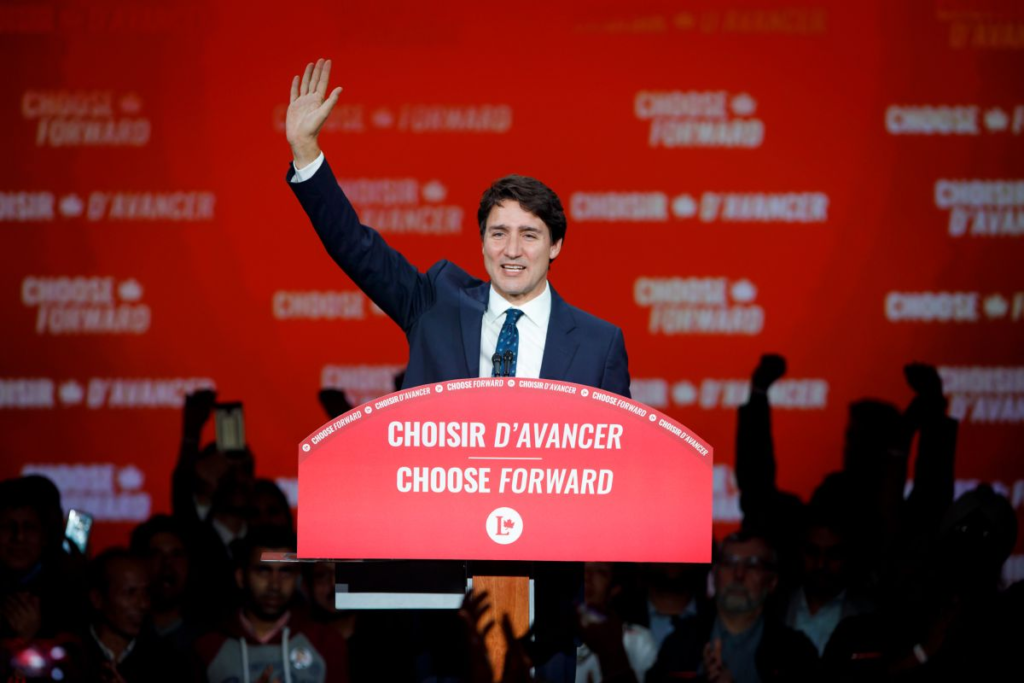
3 Takeaways from Canada’s election

Justin Trudeau limped to the finish line to secure a second term as Prime Minister of Canada, after what was an unusually bitter campaign by Canadian standards. Trudeau will however not be able to form a majority government on his own this time around, and will likely have to coalition to NDP’s Jahmeet Singh in order to get a functional majority.

Andrew Scheer actually won the popular vote- Despite his party netting 36 seats more than conservatives did, Justin Trudeau appears to actually have received about 240,000 fewer votes (1.3% less) than Andrew Scheer. Unsurprisingly, the largely Trudeau-adoring Canadian and International press has all but ignored this fact. And while, it’s true that the popular vote is just as much a meaningless consolation prize for Scheer as it was for Hillary Clinton, Trudeau going from a solid victory in 2015 to an embarrassingly weak victory in 2019, signals severe problems for the Prime Minister going forward.

Canada is seeing similar political trends as the US: Much like what we saw happen between the 2012 and 2016 election in the U.S., rural conservative regions in the nation’s center grew even more conservative than they were before, while conservatives made (limited) inroads in the heavily Liberal, yet lightly populated working class regions of Atlantic Canada (Nova Scotia, New Brunswick, Prince Edward Island). In the heavily populated Toronto metro however, Conservatives gained no ground, which helped Liberals secure their nationwide victory here. Despite being a bellwether just a few years ago, the wealthy, heavily college educated, and rapidly diversifying Toronto metropolitan region has become virtually as out of reach to today’s Canadian Conservative Party as Fairfax County Virginia has become to the GOP.

Quebec Nationalism rises from the ashes: After four consecutive elections of Bloc Quebecois hemorrhaging support in Canadian elections, the party and the movement came roaring back. Outside the Liberal stronghold of Montreal, the vast majority of ridings (districts) that were carried by Liberals or the NDP in 2015, turned turquoise (Bloc-Quebecois’ color) Monday night. The lone French-speaking Province has long felt a separate cultural identity from the rest of Canada (as evidenced by a 1995 referendum that nearly brought the province to independence). Over the past 15 years, the Bloc’s dominance over the sprawling province had diminished, giving hope to the idea that Quebec separatism and nationalism had died. Monday’s results showed a completely different picture. If Quebec voters have abandoned Canada’s main political parties in favor of a party that only runs in Quebec, it’s only a matter of time before separatist emotions begin to bubble up in the nation’s Second most populace province yet again.

Nationalism’s make or break moment: October 2019

Boris Johnson's entire political career hinges on the deliverance of Brexit by the October 31st deadline
Boris

Most will agree that the seed that germinated the rise of European nationalism stems from Angela Merkel’s decision (as well as leaders in Sweden, Netherlands, France, and Belgium) to open the doors of Europe to millions of Middle Eastern migrants in 2015 and 2016. In the U.S., it’s roots are a little more difficult to trace. Certainly John McCain’s selection of Sarah Palin as his running mate in 2008 (and her role in the subsequent rise of the Tea Party shortly there after forever changed the GOP) was in hindsight when those roots became visible, but the original seed of modern American nationalism likely came to life a decade earlier with Jesse Ventura’s improbable victory in the 1998 Minnesota Governor’s race. Although his message aligned more with the liberal populism espoused by Bernie Sanders and Elizabeth Warren today, his victory was in large part fueled by “rural rage” and by voters fed up with “politics as usual”.

By 2016, long ignored nationalism finally entered the Western political mainstream when voters in the UK shockingly voted to leave the EU in June, and voters in the United States elected Donald Trump as leader of the free world over Hillary Clinton a few months later. This month will be pivotal in 4 of the greatest Western nations, and will largely decide whether nationalism in the West was little more than an overhyped moment, or whether it’s set to replace neoliberalism as the dominant global political force.

United Kingdom: It’s hard to overstate how quickly UK politics devolved over the month of September. Boris Johnson started the month riding on a wave of popular support, quickly uniting the Conservative Party behind him, and seemed unstoppable in his quest of delivering Brexit with or without a deal by October 31st. That all changed rapidly when Johnson announced he was suspending parliament. Anti-Brexit forces across the island (and across the world) mobilized swiftly against him. Twenty of Johnson’s own MPs bucked Johnson’s call for a “Brexit at any cost” and had the whip (party membership) removed from them. As well, the Conservatives coalition partner: Northern Ireland’s DUP, rebelled against Johnson’s Parliament suspension and his plans on the Irish backstop. Suddenly, Johnson no longer had a Parliamentary majority. Parliament seized on this sudden weakness, and passed multiple bills blocking both a no-deal Brexit, and blocking any attempts at an election unless Johnson agreed to extend the deadline beyond October 31st. Johnson refused. Parliament then passed a law requiring Johnson to follow orders or be thrown in jail. Johnson called their bluff and still refused. Many in the U.K. observed that British Politics had suddenly become as polarizing and unworkable as that of America. Johnson as Trump, and Corbyn as Pelosi, reaching a compromise on nothing. Johnson’s fortunes sunk further when the Supreme Court of Britain ruled Johnson’s suspension of Parliament to be unconstitutional, and called for the immediate restoration of Parliament. Though in the moment it seemed like yet another defeat for the Prime Minister, the re-convening of Parliament however, turned out to work in Johnson’s favor.

Opposition leader Jeremy Corbyn’s immediate attempt at calling for a “vote of no confidence” in Johnson and thus ushering him in as temporary Prime Minister left him defeated out of the gate when the rebel Conservative MPs as well as many LibDem and Scottish National MPs refused to back any coup that installed Corbyn as Prime Minister. This left Corbyn and the Labour Party opposition neutered just 2 days in. What’s more, despite strong attempts at reversing the tide, the general mood across both the public and of business and political leaders across the U.K. and E.U. seem resigned to the fact that Brexit is going to happen on October 31st. Meaning, that any chance of parliament building public momentum to force Johnson to abide by their statute seemingly has faded away. A once weak looking Johnson seems to have gained a significant upper hand over options-limited opposition leaders Jeremy Corbyn and Jo Swinson.

While the chances of Johnson getting a deal ratified by both the 27 EU member states and his own Parliament (even though DUP and rebel Conservatives now seem on board with him) are slim, the UK departing the EU on October 31st regardless, seem increasingly likely, which if comes to fruition, will be one of the first major foreign policy victories against the neo-liberal/neo-conservative structure that has had an iron grip on political, social, and economic power across the West for decades.

Canada: Canada’s general election is slated to happen in less than 3 weeks. The incumbent Prime Minister Justin Trudeau has become the poster boy for liberal globalism and a darling to a media that craves image over substance. He’s been a vocal critic of Donald Trump and of nationalism in general, while being one of the few remaining Western leaders who tout their support for the political establishment and for an increase to already high rates of immigration. The test here will be whether even in liberal Canada if voters have soured on the globalist ideology.

His main opposition, Conservative Andrew Scheer isn’t much of a nationalist though. Andrew Scheer has long been a “compassionate conservative” in the mold of George W. Bush or Mitt Romney. He’s the kind of pro-immigration, pro-business, goes to church every Sunday cookie cutter candidate that would have been a Conservative Party dream 20 years ago. His surprisingly narrow victory over actual nationalist Maxime Bernier to be the leader of the Conservatives however showed that neo-conservatism is a dying ideology. Since that election 2 years ago, sensing the winds of change moving against traditional conservative ideology, Scheer has moved to the right on issues involving trade and immigration, while mentioning abortion, LGBT, and religious issues much less, even if begrudgingly so on both.

If Trudeau wins, Canada will likely stand increasingly isolated in its push for globalism and multi-culturalism in the West. If Trudeau loses, while still not a solid victory for nationalism, it will signal a death knell for neoliberalism, and leave Germany’s departing Angela Merkel and France’s embattled Emmanuel Macron alone as the only major powers still supportive of the liberal world order.

Germany: Germany is unique in that it has its state elections spread out over the course of years instead of simultaneously. This allows the nation to be in what seems like a perpetual state of campaigning. On October 27th, the state of Thuringia is the final state voting in 2019, and many in the nationalist AfD (Alternative for Deutschland) are feeling optimistic about their chances of having their first statewide victory here.

Chancellor Angela Merkel’s decision to take in over 1.1 million migrants into Germany during the 2015/2016 period made her an unlikely hero to the liberal press (after being portrayed as a conservative obstructionist for most of her tenure), it also caused a swell of anti-migrant sentiment and German nationalism, especially in areas that were a part of former East Germany. Out of that sentiment rose the AfD. Once just a fringe party ignored by virtually the entire political establishment, it gained prominence after coming in third place during the German Federal election of 2017. It was clear that nationalism was rising even here in the epicenter of the EU. State election this September in Saxony and Brandenburg (also parts of former East Germany) showed the AfD pulling into a close second place. More than doubling their 2014 results in the same regions, but an outright win still eluded the AfD.

Cue in Thuringia. Polls show AfD narrowly trailing here, and there’s a lot of pressure for AfD to finally win an election instead of just improving on previous results. A defeat in Thuringia would halt much of the momentum AfD has created over the past few years, and would possibly allude to nationalism in Germany cresting instead of rising. A victory in Thuringia however would signal that the fierce political structure built by Merkel, has also been undone by Merkel’s own actions, and will likely lead to a domino effect in AfD’s favor across all of East Germany heading into the impending National election to replace her.

United States: Donald Trump’s clinching of the GOP nomination and his successful attempt at becoming President of the United States will forever change American politics, that is indisputable. How significant that change is, and how nationalist the turn is in the United States, largely depends on Trump’s time in office. With Biden’s campaign seemingly withering, and Sanders campaign already in a downward spiral even before his emergency surgery this week, Trump’s two strongest opponents in head to head match-ups seem unlikely to make it to the finish line. This leaves a field of candidates (led handily by Elizabeth Warren) polling roughly even with Trump at best in swing states, before the inevitable Democratic slugfest even begins. Trump as of now seems in much better shape for re-election than he ever did for his initial election. But that’s not why October is pivotal in the United States. The U.S. is on this list solely because of the impeachment inquiry launched against him by House Democrats.

When Trump says “The Democrats have been trying to impeach me since the day I got elected”, he’s largely right. On inauguration day, nearly 40% of Americans (and over 70% of Democrats) favored impeaching Trump on day one. Those number have fluctuated, but support for impeachment has never fallen below the mid 30s and never been higher than the mid 40s, indicating the late breaking wave of lawmakers calling for impeachment isn’t based on a groundswell of new public support, it’s based on political obedience and a long standing desire to remove Trump by any means possible. If any lesson from the 2016 election should be crystal clear, it’s that the public has gone into an open revolt against a blatantly obtuse and unresponsive political establishment. Undemocratic attempts at trying to remove a leader who represents that revolt is all but certain to fire up and invigorate that same nationalistic voter base heading into 2020.

A best case scenario for Democrats (and de facto for globalists) is a speedy House impeachment, a quick rejection by the Senate, and a public that forgets the episode ever happened. The further it deviates from that script, the worse it gets for Democrats. If Democrats drag on their inquiry in the house, it will allow Republican attacks (that are already happening) on swing and pink district Democratic Representatives to begin filling in the blanks that the public has on the motives and objectives of this investigation. Likewise, if the Republican Senate decides to make a political show of this instead of a simple and quick rejection of it, they can simply set their sights and energy on Joe and Hunter Biden’s affairs in the Ukraine, and turn Joe Biden into this cycle’s Hillary Clinton. If this issue is STILL in the House by the end of this month, it will look like the main objective of these freshman Democrats was impeachment all along, and thus chances of Democrats retaining the House, and defeating President Trump will precipitously drop. Which, bodes strongly for the potential of a re-elected Trump and a much more Trump-centric nationalistic GOP congress in 2021.

Design a site like this with WordPress.com
Get started